GEOTECHNICAL ENGINEERING
HAMPTON VIRGINIA
HomeInvestigationSPT (Standard Penetration Test)

SPT Testing in Hampton, Virginia: Reliable Penetration Resistance Data

Rigorous testing. Clear reporting.

LEARN MORE

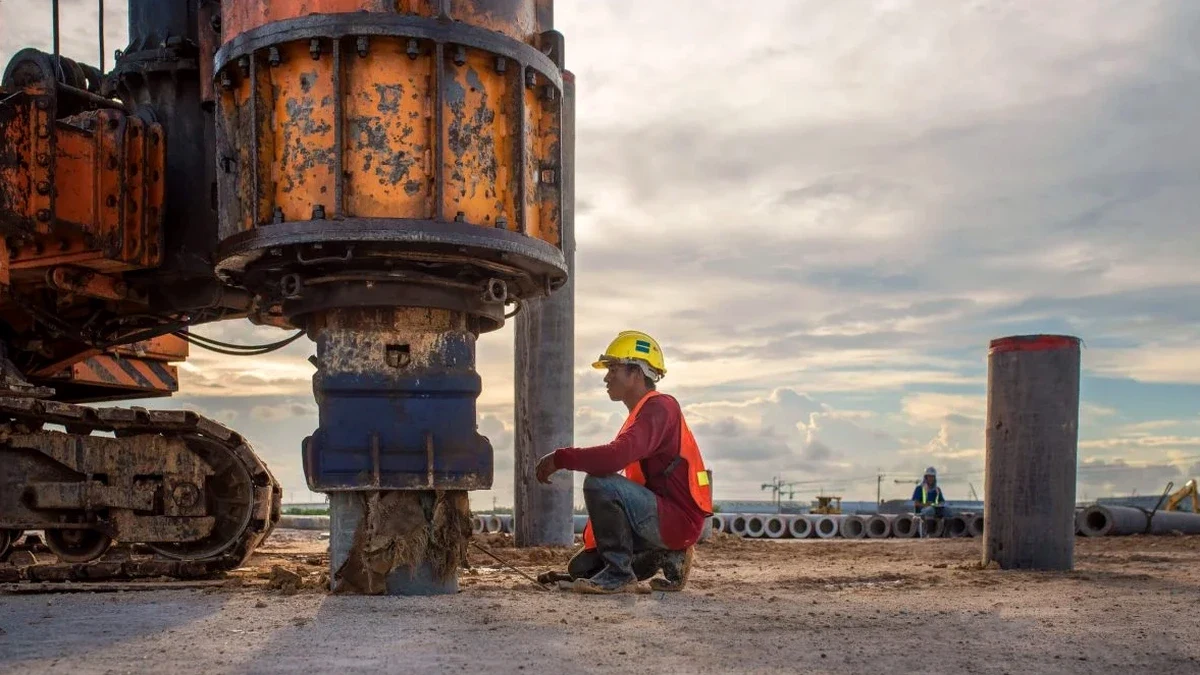
The tidal creeks and low-lying topography of Hampton, Virginia create a subsurface environment where loose sands, soft silts, and organic clays interleave in patterns that shift dramatically within a single lot. With an average elevation barely 10 feet above sea level and groundwater commonly within 4 to 6 feet of the surface, the Standard Penetration Test becomes the first line of defense against differential settlement. Our team runs SPT borings throughout Hampton—from the historic residential blocks near Buckroe Beach to the redevelopment parcels downtown—capturing blow counts that reveal exactly where bearing capacity drops off. Because the Virginia Coastal Plain geology includes the Yorktown Formation and younger Quaternary deposits, interpreting N-values correctly means understanding both regional stratigraphy and local groundwater behavior. For sites where refuse fill or old marsh deposits complicate the picture, we often pair the SPT program with CPT soundings to build a continuous profile of tip resistance alongside the discrete N-values.

In Hampton’s high-water-table environment, uncorrected SPT blow counts can be misleading—applying overburden and energy corrections is what separates a safe foundation from a settlement claim.
Our service areas

Our approach and scope

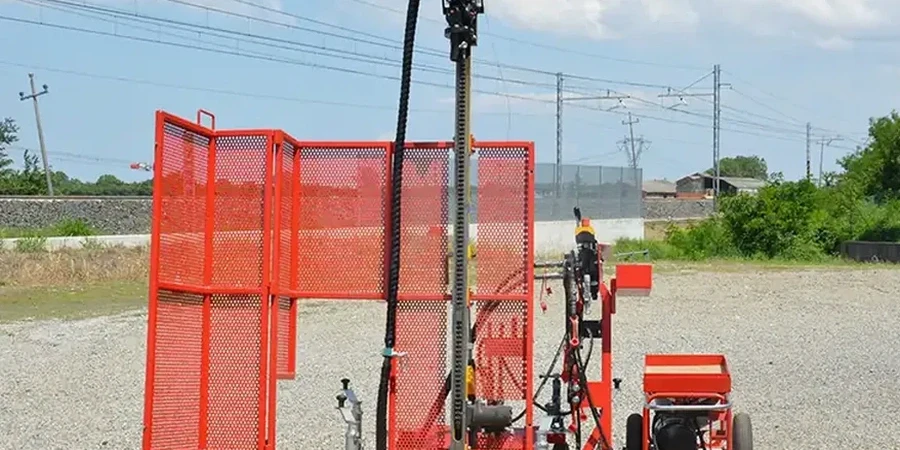
Subsurface conditions in Hampton can differ sharply between neighborhoods separated by only a tidal inlet. In the Phoebus district, we frequently encounter dense sands of the Tabb Formation at depths of 12 to 18 feet, yielding N-values above 30 that support shallow footings with minimal preparation. Cross over to the low terraces near the Hampton River, however, and the same depth range often produces N-values of 4 to 8 in soft gray clay with shell fragments—material that requires deep foundations or ground improvement. Our SPT methodology follows ASTM D1586 with a safety hammer calibrated for energy efficiency, so the reported N60 values give structural engineers a consistent basis for design.
  • Depth range typically 20 to 60 feet, extended to 80 feet for deep foundation analysis
  • Continuous sampling with 24-inch split spoon to capture thin seams of weak material
  • Standard penetration intervals at 2.5-foot spacing in potentially liquefiable strata
  • Field logging of moisture, color, and consistency by a geologist familiar with Coastal Plain soils
SPT Testing in Hampton, Virginia: Reliable Penetration Resistance Data
Technical reference — Hampton Virginia

Site-specific factors

We reviewed a three-story mixed-use project on Settlers Landing Road where the initial SPT borings showed competent N-values of 18 to 22 in the upper 15 feet, then a sudden drop to N=3 in a 4-foot-thick layer of highly organic silt at 22 feet. The architect had planned spread footings at 6 feet; the geotechnical report based on those SPT logs flagged the deep soft layer and triggered a redesign with driven piles bearing in the denser sands below 35 feet. Without those intermediate blow counts, the weak seam would have gone undetected and settlement would have appeared within the first two years of occupancy. Hampton’s buried marsh deposits—remnants of filled creeks and back-bay areas—make this scenario far more common than developers expect. Skimping on SPT depth or increasing the sampling interval to 5 feet to save cost is a gamble that almost never pays off in this part of the Tidewater region.

Need a geotechnical assessment?

Reply within 24h.

Email: [email protected]

Regulatory framework

ASTM D1586: Standard Test Method for Standard Penetration Test (SPT) and Split-Barrel Sampling of Soils, ASTM D2487: Standard Practice for Classification of Soils for Engineering Purposes (Unified Soil Classification System), IBC 2021: International Building Code – Section 1803 geotechnical investigations, ASCE 7-22: Minimum Design Loads – seismic site classification using SPT N-values

Reference parameters

ParameterTypical value
Test StandardASTM D1586 / AASHTO T 206
Hammer TypeSafety hammer (donut available on request)
Energy Correction (CE)Typically 0.60–0.80 per calibrated system
Borehole Diameter4-inch hollow-stem auger standard; 6-inch for deeper profiles
Sampling Interval2.5 ft standard; continuous in critical zones
Groundwater MonitoringRecorded at time of drilling and after 24-hour stabilization
ReportingN-value, N60, overburden-corrected N1(60), soil description per ASTM D2487

Common questions

How much does an SPT investigation cost in Hampton, Virginia?

For a typical residential or light commercial project in Hampton, an SPT drilling program with two to three boreholes generally falls between US$530 and US$650 per borehole, depending on depth, access conditions, and the number of samples recovered. Mobilization, traffic control in urban areas like downtown Hampton, and laboratory classification testing are quoted separately on a per-project basis.

How deep should SPT boreholes go for a single-family home in Hampton?

For most single-family residential construction in Hampton, we recommend boreholes to a minimum of 20 feet below finished grade, with extension to 30 or 40 feet where loose sands or soft clays are encountered. The IBC requires borings to extend through any unsuitable bearing strata into competent material. On lots near tidal creeks or filled marshland, deeper exploration is prudent to identify compressible organic layers that could consolidate under footing loads.

How are SPT N-values corrected for the high water table in Hampton?

Raw field N-values are first corrected for hammer energy efficiency using a calibration factor specific to the rig and hammer system. Overburden correction (Cn) accounts for the confining pressure at each sampling depth; in Hampton’s saturated fine sands and silts, this correction can reduce the raw N-value by 20 to 40 percent. The resulting N1(60) value is what structural engineers use for liquefaction assessment and bearing capacity calculations, particularly where the groundwater table is within 5 feet of the surface.

Location and service area

We serve projects in Hampton Virginia and surrounding areas.

View larger map