GEOTECHNICAL ENGINEERING
HAMPTON VIRGINIA
HomeLaboratoryLaboratory CBR test

Laboratory CBR Testing for Pavement Design in Hampton Virginia

Rigorous testing. Clear reporting.

LEARN MORE

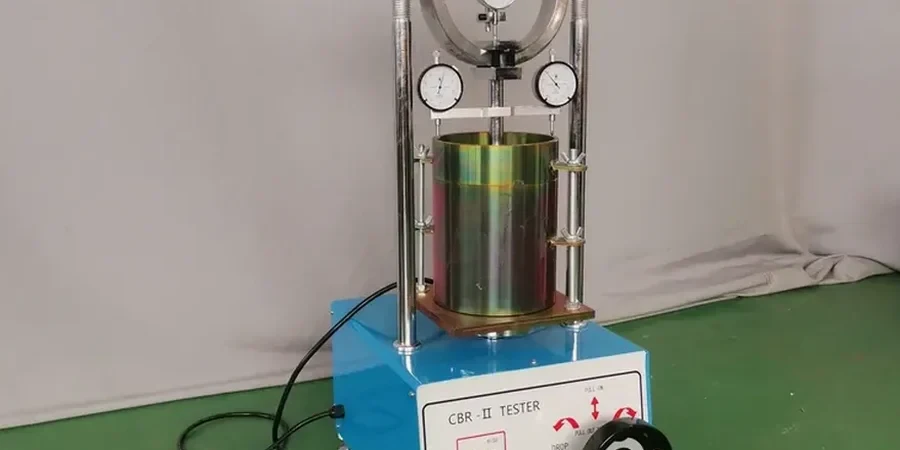
From the sandy loam near Buckroe Beach to the clay-rich soils closer to the Hampton Coliseum, ground conditions across Hampton change faster than a Chesapeake Bay tide. A pavement section that performs well on Mercury Boulevard might fail prematurely just a few miles west if the subgrade strength wasn't verified with a laboratory CBR test. The local geology here is shaped by ancient marine terraces and estuarine deposits, meaning organic silts and loose sands are common surprises during excavation. We run each laboratory CBR test under controlled moisture and density conditions so contractors get a design value they can trust, not just a number on a report. Before finalizing a pavement thickness design, many engineers pair our lab soak with field data from a plate load test to confirm how the compacted layer actually responds under load. That combination catches problems before the asphalt goes down.

A soaked CBR value below 3 in Hampton's marine clays means you're looking at a full-depth reclamation or a geogrid solution, no way around it.
Our service areas

Our approach and scope

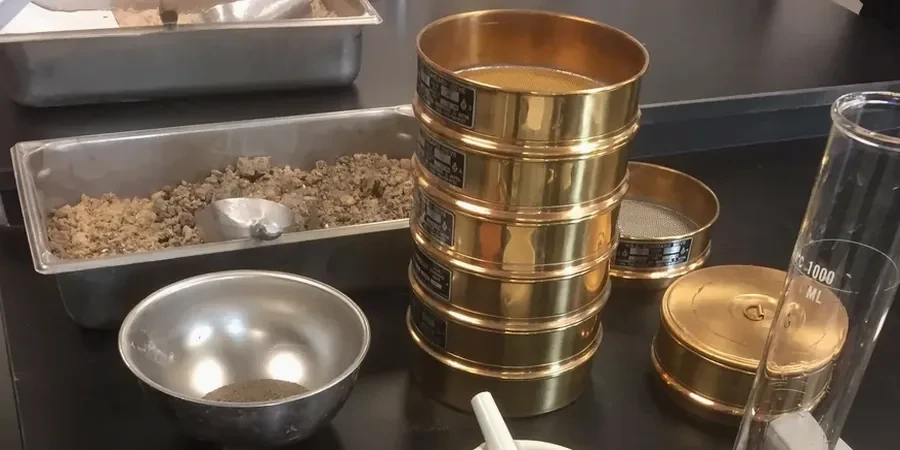
A mistake we see repeatedly in Hampton is contractors compacting subgrade to a target density, then assuming the CBR value will automatically meet VDOT spec. It doesn't work that way. A dense clay can still swell and lose bearing capacity after saturation, and the laboratory CBR test is designed specifically to expose that weakness through the 96-hour soak. Our technicians follow ASTM D1883 procedures precisely, measuring penetration resistance with a standardized plunger and recording the load-penetration curve at 0.025-inch intervals. We report CBR at both 0.1 and 0.2 inches, and the higher value governs the design. For projects where the road section includes granular base over marginal subgrade, the grain-size analysis helps us correlate fines content with the soaked CBR reduction factor, giving the project geotechnical engineer a complete picture before they commit to a lime treatment or an undercut. That level of detail saves money on over-excavation.
Laboratory CBR Testing for Pavement Design in Hampton Virginia
Technical reference — Hampton Virginia

Site-specific factors

Hampton sits squarely within the Atlantic Coastal Plain, and the IBC references ASCE 7 for structural loads, but the pavement design chapter is where CBR becomes non-negotiable. If the subgrade isn't tested and a pavement fails prematurely on a commercial lot off Coliseum Drive, the repair cost dwarfs the testing fee by a factor of ten or more. The real exposure isn't just rutting; it's the liability when ponding water from a depressed pavement section creates a slip hazard or when delivery trucks can't access a loading dock because the asphalt base has punched through. A soaked laboratory CBR test, run on a remolded sample compacted at the specified field density, gives the design engineer the input needed to size the base course and select the right asphalt thickness. Without it, you're guessing, and in Hampton's variable soils, guessing wrong is expensive.

Need a geotechnical assessment?

Reply within 24h.

Email: [email protected]

Watch the video

Regulatory framework

ASTM D1883: Standard Test Method for California Bearing Ratio of Laboratory-Compacted Soils, ASTM D698: Standard Test Methods for Laboratory Compaction Characteristics of Soil Using Standard Effort, VDOT Road and Bridge Specifications, Section 305

Reference parameters

ParameterTypical value
StandardASTM D1883
Sample preparationStandard or Modified Proctor effort
Soaking period96 hours submerged
Surcharge weight4.54 kg (10 lb) minimum
Penetration rate0.05 in/min (1.27 mm/min)
Reported valuesCBR at 0.1" and 0.2" penetration
Sample diameter6 inches (152.4 mm)
Compaction controlMoisture-density relationship per ASTM D698 or D1557

Common questions

How much does a laboratory CBR test cost in Hampton?

A single-point laboratory CBR test, including the Proctor compaction curve and the 96-hour soak, typically runs between US$120 and US$210 depending on the number of compaction points and whether swell measurement is required. Most Hampton projects need at least three points per soil type encountered, so a full subgrade characterization for a commercial lot often lands in the US$400–US$650 range.

How long does it take to get lab CBR results?

The soaking period alone is four days per ASTM D1883. Add sample preparation, compaction, and penetration testing, and the standard turnaround is five to seven business days from sample receipt. We can coordinate with your Hampton earthwork schedule so results arrive before the subgrade inspection deadline.

What CBR value does VDOT require for subgrade?

VDOT typically requires a soaked CBR of 6 or higher for subgrade supporting flexible pavement, though specific thresholds vary by traffic loading and pavement section. For high-volume roads near Langley AFB access points, the design CBR target is often higher, and our lab reports include the CBR at both 0.1-inch and 0.2-inch penetration so the pavement engineer can select the governing value.

Location and service area

We serve projects in Hampton Virginia and surrounding areas.

View larger map