GEOTECHNICAL ENGINEERING
HAMPTON VIRGINIA
HomeUnderground ExcavationsGeotechnical excavation monitoring

Geotechnical Excavation Monitoring in Hampton, VA

Rigorous testing. Clear reporting.

LEARN MORE

Hampton sits barely 10 feet above sea level on average, and when you cut more than 8 feet into these coastal plain sediments, the water table shows up fast. Our team has monitored dozens of excavations within a half-mile of the Hampton Roads waterfront where tidal fluctuation alone can swing pore pressure readings by 15% in a single cycle. The challenge here is not just the sand and soft clay sequence, but the proximity of century-old infrastructure—brick storm drains from the 1920s, shallow utilities, and neighboring structures on spread footings that were never designed for adjacent deep excavation. We deploy vibrating wire piezometers, inclinometers, and automated total stations to track movement before it becomes a problem. For projects where the cut extends below the water table, combining monitoring with a deep excavation support plan gives the contractor clear thresholds for when to adjust dewatering or shoring pressure.

Real-time displacement data in Hampton's high-water-table soils is the difference between adjusting a dewatering pump early and losing a shoring wall to a blowout.

Our service areas

Our approach and scope

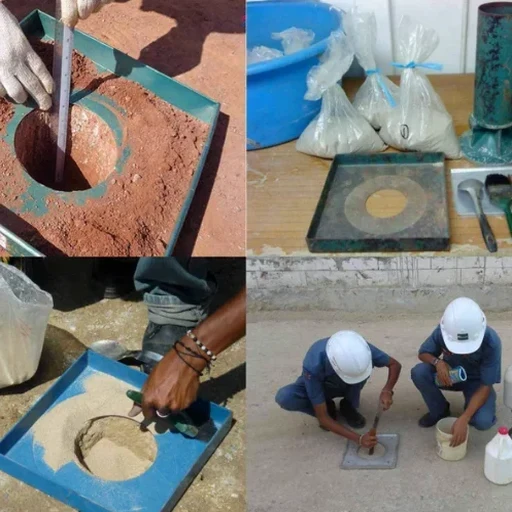
Hampton's geology shifts noticeably between the western side near I-64 and the eastern peninsulas closer to the Bay. Upland jobs encounter the Yorktown Formation—dense shelly sands that stand well in vertical cuts but produce unpredictable vibration patterns during sheeting installation. Closer to the water, artificial fill over marsh deposits creates a completely different monitoring scenario: settlement troughs can extend 40 feet beyond the excavation perimeter if not tracked daily. We instrument each project based on a site-specific deformation analysis, not a generic checklist. Typical arrays include crack monitors on adjacent structures, borehole extensometers at multiple depths, and data loggers recording at 10-minute intervals. When we encounter layered profiles that demand classification for shoring design, we pull samples for grain size distribution analysis to confirm silt content—because Hampton's silty fine sands behave very differently from clean sands under vibration loading.
Geotechnical Excavation Monitoring in Hampton, VA
Technical reference — Hampton Virginia

Site-specific factors

A contractor on North King Street once called us after noticing a quarter-inch crack appear overnight in a 1940s masonry building adjacent to a 14-foot excavation. The dewatering system had pulled fines through an undetected sand lens, creating a small void under the footing. Within 36 hours we had inclinometer data showing lateral movement at the 9-foot depth and piezometer readings indicating a 6-foot drawdown radius wider than modeled. That data let the engineer redesign the recharge well array and stabilize the soil before the crack propagated further. In Hampton's coastal plain, the most expensive lesson is assuming that short-term cuts in sand won't affect adjacent structures. They do. Settlement accelerates quickly when groundwater control lapses even briefly. Our monitoring program catches those inflection points early, turning what could be a structural repair into a manageable field adjustment.

Need a geotechnical assessment?

Reply within 24h.

Email: [email protected]

Regulatory framework

IBC 2021 (Virginia Uniform Statewide Building Code), ASCE 7-22 Section 3.2 (Risk Categories), ASTM D6230 (Inclinometer monitoring), ASTM D7299 (Vertical settlement measurement), OSHA 29 CFR 1926 Subpart P (Excavation safety)

Reference parameters

ParameterTypical value
Monitoring frequency (active phase)Daily readings; automated hourly during critical cuts
Typical settlement marker spacing15 to 25 ft along excavation perimeter
Inclinometer casing depth10 to 20 ft below maximum cut depth
VW piezometer range0 to 100 psi, accuracy ±0.1% FS
Crack monitor resolution0.01 inch (0.25 mm)
Trigger thresholds (IBC-based)Angular distortion > 1/500, settlement > 0.5 inch
Data deliveryDaily PDF reports; SMS alerts at 80% of threshold

Common questions

What is the typical cost for excavation monitoring in Hampton Virginia?

Monitoring programs in Hampton typically range from US$950 to US$2,240 depending on the number of instruments, duration, and reporting frequency. A basic setup with settlement points, two inclinometers, and weekly reports falls at the lower end. Full instrumentation with automated piezometers, vibration monitoring, and daily cloud-based data delivery reaches the upper range. Every project gets a customized scope based on excavation depth and adjacent structure risk.

How often are readings taken during active excavation?

During active cutting and shoring installation we read inclinometers and survey settlement points daily. Automated instruments like piezometers and crack monitors log at 10-minute intervals. If readings approach 80% of the action threshold, we shift to continuous monitoring and notify the contractor immediately. After backfill, we reduce to weekly readings until stabilization is confirmed.

What instrumentation is required for excavations deeper than 12 feet near Hampton's waterfront?

Excavations over 12 feet deep in Hampton's high-water-table zones require inclinometers embedded at least 10 feet below the cut, vibrating wire piezometers at two depths, and settlement markers on all adjacent structures within a distance equal to the excavation depth. We also recommend crack monitors on any masonry building older than 50 years—there are many of those in the Phoebus and Downtown Hampton districts.

Can monitoring data help reduce shoring costs on a Hampton project?

The reference range for this service in Hampton Virginia is US$950 - US$2.240. The final price depends on the project scope and volume.

Location and service area

We serve projects in Hampton Virginia and surrounding areas.

View larger map