GEOTECHNICAL ENGINEERING
HAMPTON VIRGINIA
HomeRoadwayRigid pavement design

Rigid Pavement Design for Hampton Virginia's Coastal Plain

Rigorous testing. Clear reporting.

LEARN MORE

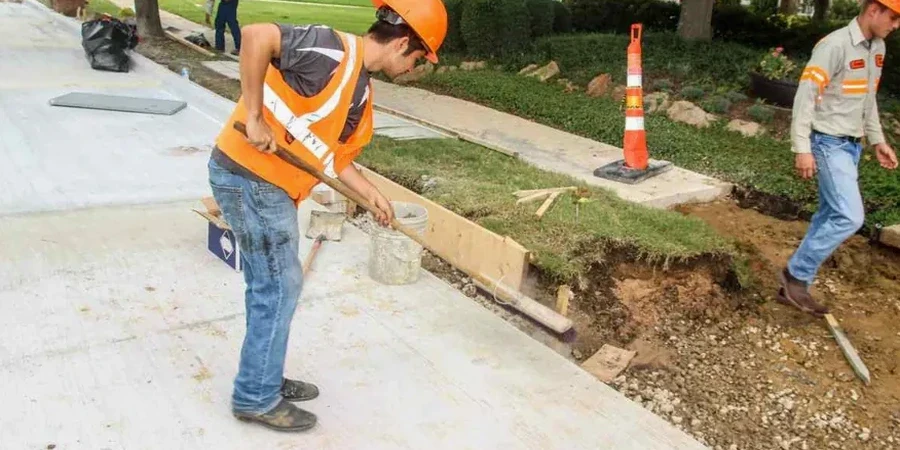
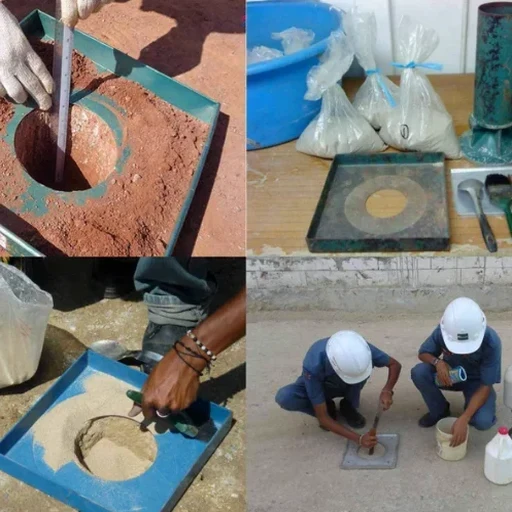
A few years back, we were called out to a commercial project off West Mercury Boulevard where a new parking lot was showing cracks within six months of placement. The subgrade was a silty clay that looked firm during dry weather but turned into a pumping mess after a single nor'easter. That’s the reality of building on the Coastal Plain—what drains well in August can become completely saturated by October. In Hampton, effective rigid pavement design starts with a geotechnical investigation that goes deeper than the topsoil, looking at the shrink-swell potential of the Yorktown Formation sediments and the depth to the seasonal high water table. We integrate our CBR testing directly into the pavement section analysis to ensure the concrete slab can handle the traffic loads without differential settlement.

In Hampton, the biggest threat to a concrete pavement isn’t the traffic—it’s the water trapped beneath it.

Our service areas

Our approach and scope

The climate here presents a unique challenge for concrete pavements: we get about 46 inches of rain annually, and the freeze-thaw cycles, while less severe than inland, still affect joint performance and subbase drainage. Our designs for rigid pavement in Hampton incorporate a non-frost-susceptible open-graded drainage layer beneath the slab to prevent the buildup of hydrostatic pressure during prolonged wet periods. We specify concrete mixes with low water-cement ratios and air entrainment tailored to moderate exposure, and we pay particular attention to load transfer efficiency at joints. For projects near the Chesapeake Bay or its tributaries, we also evaluate sulfate attack potential in groundwater—something that can significantly shorten the service life of a pavement if ignored. We’ve found that combining a thorough subgrade evaluation with a properly designed stabilized subbase is the most reliable way to avoid mid-panel cracking in this environment.
Rigid Pavement Design for Hampton Virginia's Coastal Plain
Technical reference — Hampton Virginia

Site-specific factors

The contrast between sites in different parts of Hampton is stark. Over in the Phoebus area, you’re often dealing with denser, sandier soils that provide decent support—but they can also hide old, unmarked utility trenches that create abrupt stiffness transitions. Down toward Buckroe and the waterfront, the water table can be less than three feet below grade, which means any pavement design has to account for buoyancy effects and potential pumping at transverse joints. The most common failure we see is corner breaks near drainage inlets where the subgrade was never properly compacted after pipe installation. Cutting corners on the subbase preparation in these wetter zones almost guarantees a loss of slab support within the first five years. A well-designed rigid pavement section for Hampton must include positive surface drainage and edge drains in critical areas, because the water is going to find its way in regardless of how well you seal the joints.

Need a geotechnical assessment?

Reply within 24h.

Email: [email protected]

Regulatory framework

ASTM D1586 - Standard Test Method for Standard Penetration Test (SPT) and Split-Barrel Sampling of Soils, ASTM D1883 - Standard Test Method for California Bearing Ratio (CBR) of Laboratory-Compacted Soils, AASHTO Guide for Design of Pavement Structures, 1993 (with 1998 supplement), ACI 360R-10 - Guide to Design of Slabs-on-Ground, IBC 2018 / Virginia Uniform Statewide Building Code (USBC)

Reference parameters

ParameterTypical value
Standard Test Method for Penetration Test (SPT)ASTM D1586 / AASHTO T 206
Classification of Soils for Engineering PurposesASTM D2487 (USCS)
California Bearing Ratio (CBR) of Laboratory-Compacted SoilsASTM D1883 / AASHTO T 193
Standard Test Methods for Liquid Limit, Plastic Limit, and Plasticity Index of SoilsASTM D4318 / AASHTO T 90
Standard Test Method for Unconfined Compressive Strength of Cohesive SoilASTM D2166 / AASHTO T 208
Standard Test Method for Particle-Size Analysis of SoilsASTM D422 / AASHTO T 88
Standard Test Method for Field Measurement of Soil Resistivity Using the Wenner Four-Electrode MethodASTM G57

Common questions

What is the typical concrete slab thickness for a heavy-duty parking lot in Hampton?

For a parking lot designed for truck traffic, we typically see thicknesses in the range of 6 to 8 inches of unreinforced concrete, depending on the CBR value of the prepared subgrade and the expected number of load repetitions. Our team determines the exact thickness using the AASHTO rigid pavement design equation after completing a geotechnical investigation.

Why do concrete pavements in coastal Virginia develop cracks sooner than expected?

The primary culprits are poor subgrade drainage and expansive clay soils. When water gets trapped under the slab, it softens the support and can cause pumping at the joints under heavy wheel loads. In Hampton, the combination of a shallow water table and fine-grained soils from the Yorktown Formation means that a properly designed open-graded drainage layer is essential to prevent this type of premature failure.

How do you account for Hampton’s high water table in the pavement design?

We specify a daylighted drainage layer beneath the concrete slab that intercepts groundwater and directs it to edge drains or stormwater structures. The subbase is often a No. 57 stone or similar open-graded aggregate, separated from the subgrade by a geotextile fabric to prevent fines migration. The key is to keep the water moving horizontally out of the pavement section rather than letting it accumulate under the slab.

What load transfer system do you recommend for industrial pavements?

For industrial pavements with heavy forklift traffic or frequent truck turning movements, we typically recommend steel dowel bars at all contraction joints to ensure positive load transfer. The dowel diameter and spacing are designed according to AASHTO guidelines based on the slab thickness, and we specify epoxy-coated or stainless-steel dowels in areas where deicing salts or brackish groundwater could cause corrosion.

What does a rigid pavement design package cost for a typical Hampton commercial project?

The cost for a complete rigid pavement design package, including subgrade investigation, laboratory testing, and the final pavement section report, generally ranges from US$2,140 to US$7,080 depending on the size of the paved area and the number of borings or test pits required. A small retail parking lot falls on the lower end, while a distribution center with multiple loading zones and heavy traffic demands a more extensive investigation and falls toward the upper end of that range.

Location and service area

We serve projects in Hampton Virginia and surrounding areas.

View larger map